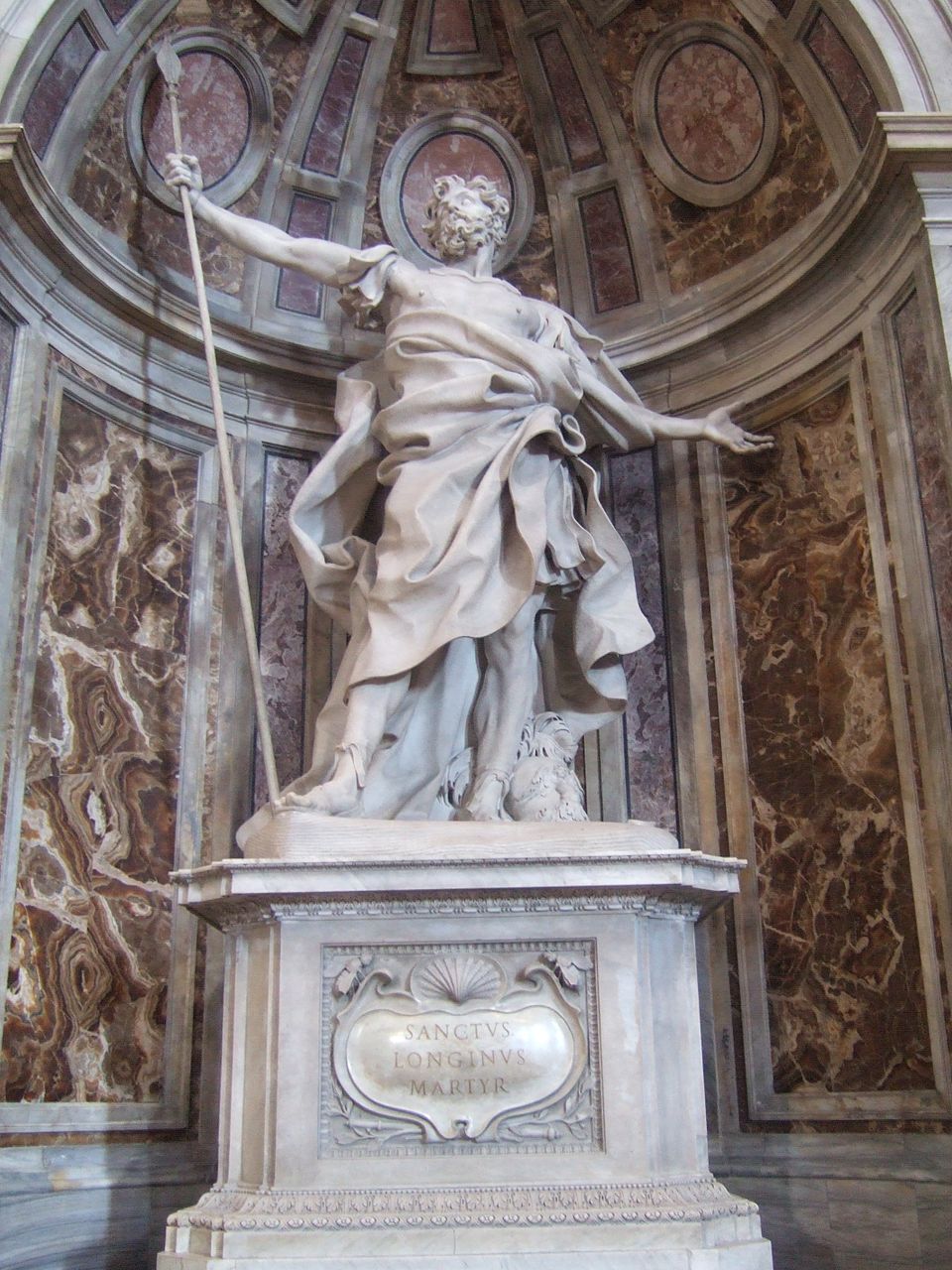
Gaius Longinus: The Soldier, The Spear, and His Miraculous Conversion
In the annals of Christian history, few figures embody the profound themes of redemption and divine intervention quite like Gaius Longinus. Traditionally identified as the Roman soldier who pierced Jesus Christ’s side during the Crucifixion with what would become known as the
spear of Longinus, his story is a captivating blend of biblical account, ancient tradition, and miraculous legend. Far more than just an instrument of a final act, the "Spear of Destiny" – and the man who wielded it – have become cornerstones of faith, power, and enduring mystery.
The Gospel's Glimpse and the Rise of a Name
The foundational account of the spear piercing Jesus’ side stems from the Gospel of John (19:34). In this pivotal moment, after Jesus had already died, Roman soldiers approached to break the legs of the crucified to hasten their demise, a common practice to ensure bodies were removed before the Sabbath. However, upon seeing that Jesus was already dead, they did not break his legs. Instead, “one of the soldiers pierced His side with a spear, and immediately blood and water came out.” This detail served to fulfill Old Testament prophecy and profoundly impacted early Christian theology, symbolizing purification and the sacraments.
Crucially, the Gospel of John does not name the soldier responsible for this act. The name "Longinus" enters Christian tradition much later, emerging from apocryphal texts and early church writings, possibly derived from the Greek word *longche*, meaning "lance" or "spear." By the 4th century, the identity of this unnamed soldier as Longinus, a Roman centurion – a commander of 80-100 soldiers – was widely accepted. This attribution transformed an anonymous act into the specific deed of an individual, allowing for the rich tapestry of legend to unfold around him. Longinus became not just a passive participant but a figure through whom divine will was made manifest.
A Blind Soldier's Transformation: The Miraculous Conversion
One of the most compelling and widely circulated legends concerning Gaius Longinus tells of his miraculous healing and subsequent conversion to Christianity. According to this tradition, Longinus suffered from a severe eye ailment, often described as near-blindness or cataracts, hindering his vision. It was in this state that he performed his duty, piercing the Messiah’s side.
The legend vividly recounts that as the spear penetrated Jesus’ flesh, a gush of blood and water—the very fluids that flowed forth—splashed into Longinus’s afflicted eyes. Instantly, his sight was perfectly restored. This profound physical healing transcended mere medical recovery; it was a spiritual awakening. Witnessing such a divine outpouring and experiencing immediate restoration sparked an unshakeable faith within him. Overwhelmed by the miracle and perhaps by the realization of who he had truly pierced, Longinus reportedly cried out, "Truly this was the Son of God!" (as echoed by another centurion in Matthew 27:54).
This moment marks his conversion. From a dutiful Roman soldier, Longinus transformed into a devout follower of Christ, abandoning his military life. Subsequent legends speak of his extensive evangelism, martyrdom, and eventual sainthood, becoming Saint Longinus. His story offers a powerful narrative of redemption – even one who inflicted harm upon Christ could find forgiveness and a new purpose through divine grace. It underscores the Christian belief that no one is beyond salvation, and that often, profound spiritual change is preceded by a personal encounter with the miraculous.
The Holy Lance: An Emblem of Power and Piety
While Gaius Longinus’s personal journey is remarkable, the instrument he wielded – the
spear of Longinus – ascended to even greater prominence as one of Christianity’s most prized and sought-after relics. Known by various names such as the Holy Lance, the Spear of Destiny, and the Holy Spear, it became revered as a tangible link to Christ’s passion. Its perceived power was immense, sparking centuries of intrigue, veneration, and conflict.
Throughout history, multiple churches and cathedrals have claimed to possess the original spear or fragments thereof, each adding to the mystique and historical complexity surrounding the artifact. The most famous contender for the title of the original Holy Lance is housed in the Hofburg Palace in Vienna, part of the Imperial Regalia of the Holy Roman Empire. This particular spear, crafted in the Carolingian style, showcases a distinctive winged design. Its central spine was modified, creating space for an intricately wrought iron pin or thorn. Over time, pious imagination transformed this central pin into one of the nails believed to have been used in the Crucifixion of Christ, further enhancing its sacred status. Leather straps secure a pair of knife blades symmetrically placed above the lance’s wings, with silver wire used in later repairs following a blade break.
From Relic to Imperial Symbol: The Spear's Enduring Legacy
The interpretations and significance of the spear of Longinus evolved dramatically over the centuries. Initially revered simply as a Passion relic, its association with power quickly grew. By the early Middle Ages, it was connected to figures like Emperor Constantine the Great, who reportedly carried it into battle. It was also venerated as the spear of Saint Maurice, an imperial saint.
By the 13th century, its identity as the Lance of Longinus, the spear that pierced Christ's side and was anointed with his sacred blood, was firmly established. This enhanced its spiritual power exponentially. European emperors and rulers, particularly those of the Holy Roman Empire, eagerly sought its possession. It became more than a religious artifact; it transformed into a potent emblem of imperial authority and divine right. The desire to rival the Byzantine emperor’s collection of paramount Christian relics and to affirm the invincibility of their rulership fueled this quest.
Regarded as the noblest among The Imperial Regalia, the Holy Lance was credited with bestowing miraculous powers that ensured military triumphs and protected emperors. Its importance as a Passion relic was further solidified by its prominent placement in the crossbeam of the Imperial Cross from the early 11th century. Emperors like Charles IV (1346-1378) were devout admirers, commissioning elaborate settings and venerating it deeply. The spear of Longinus transcended its origin as a simple weapon, morphing into a testament to faith, a symbol of redemption, and a powerful instrument of worldly dominion, profoundly shaping both religious devotion and political ambition for over a millennium.
Conclusion
The story of Gaius Longinus and the spear of Longinus stands as a monumental narrative within Christian lore. From the unnamed Roman soldier fulfilling prophecy to the miraculously converted saint, Longinus’s journey embodies themes of repentance, revelation, and new beginnings. Simultaneously, the spear itself, initially an instrument of suffering, ascended to become the Holy Lance – a relic of unparalleled spiritual power and a coveted symbol of imperial authority. This twin legacy, intertwining the fate of a man with the destiny of an artifact, continues to captivate, reminding us of the profound impact of individual acts and the enduring power of faith in shaping history and belief.